
Sky Robots South Africa develops and manufactures drone aircraft, bringing composite structures, electronics, propulsion and software together. Assembly, inspection and flight testing connect engineering decisions with the equipment delivered to operators.
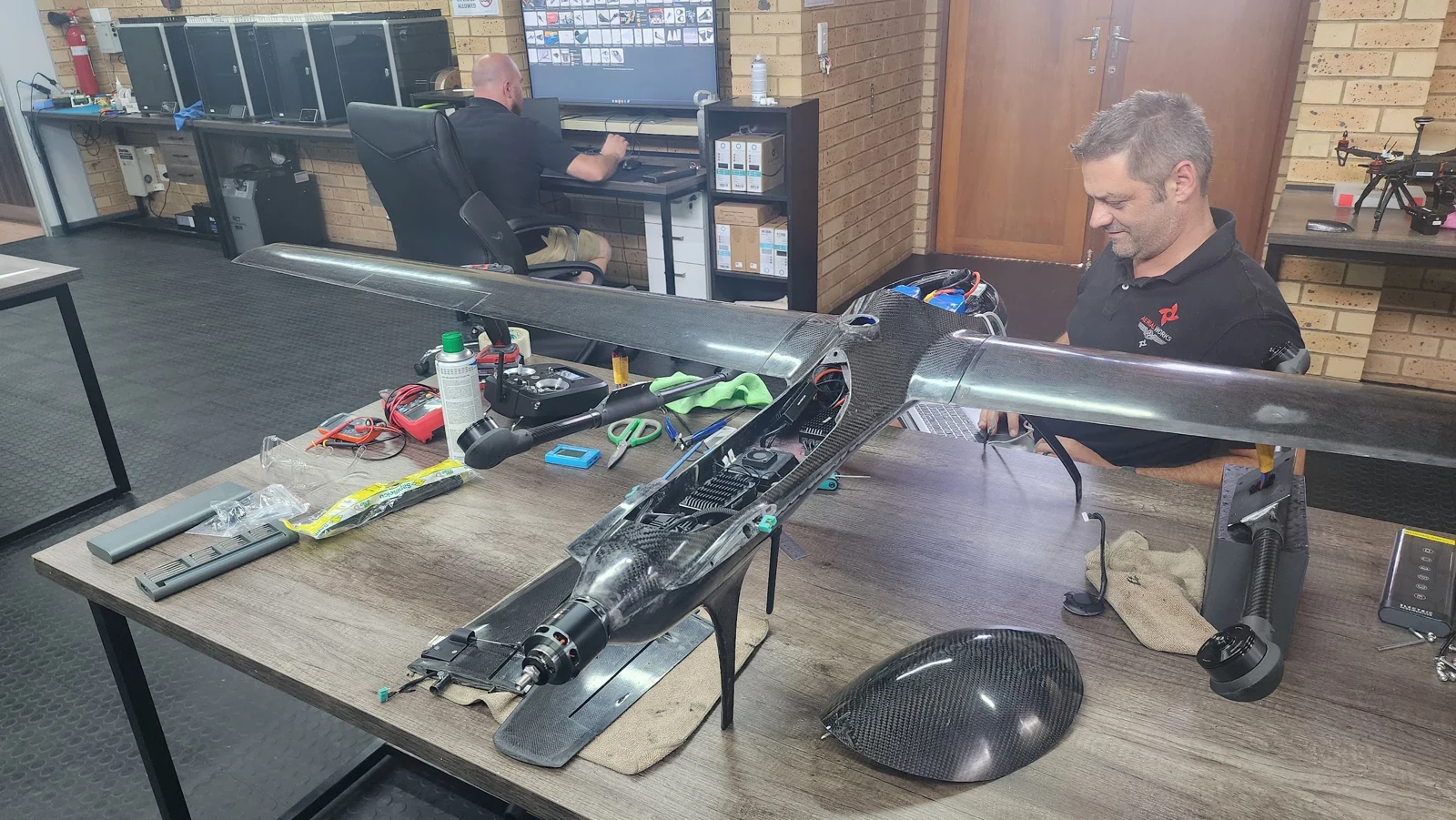
Carbon-fibre and composite manufacturing
Composite manufacturing is part of our aircraft development and production work. The move from the early G1 platform to the carbon-fibre G2 airframe marked a practical step in the design and manufacture of Sky Robots aircraft.
Airframe engineering considers structural requirements, equipment access, component mounting and assembly. Inspection and maintenance instructions carry these decisions into the aircraft’s supporting documentation.
Electronics and avionics integration
Flight controllers, navigation equipment, radios, payloads and power distribution are integrated around the aircraft. Wiring, mounting and configuration need to work together within the available airframe space and electrical system.
The current SRV32 G3 uses ArduPilot-based flight control with Cube Orange+, ADS-B In and a LiDAR landing rangefinder. The supported equipment and software configuration are identified for each aircraft.
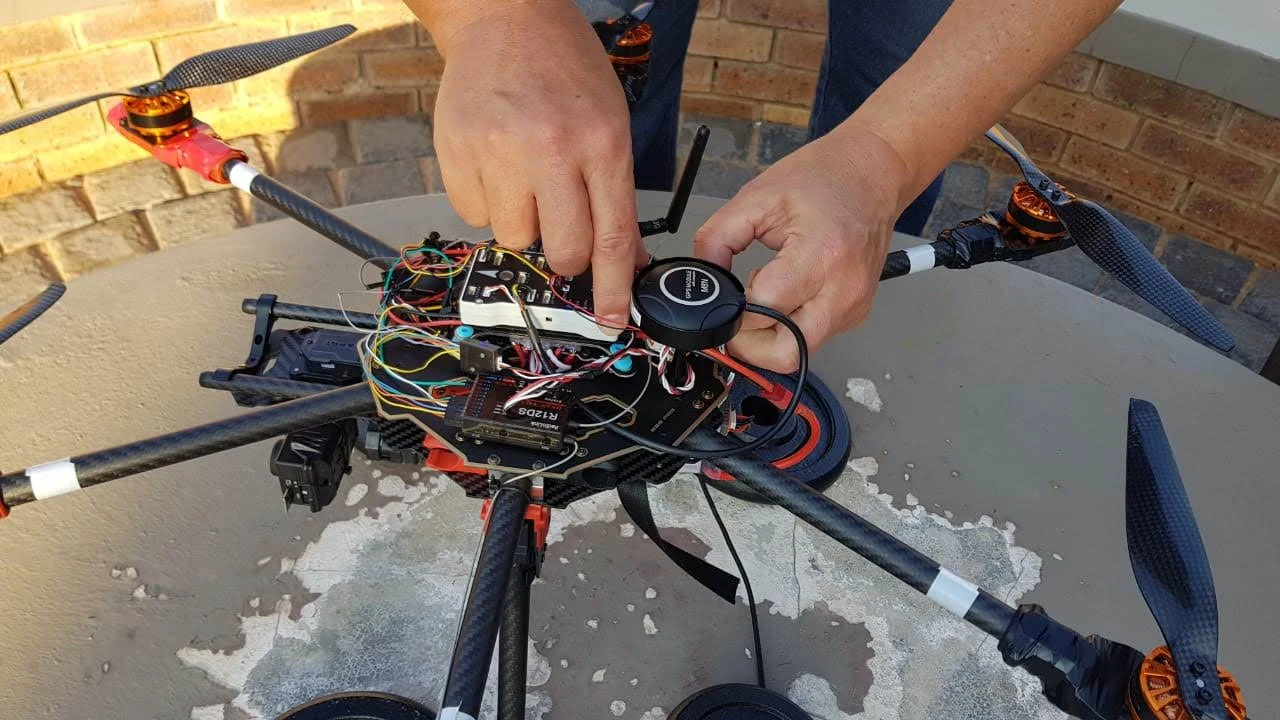
Aircraft assembly
Aircraft assembly brings the composite airframe together with propulsion, avionics, communications and the camera installation. Access for inspection, component replacement and maintenance is considered alongside the finished aircraft.
Fixed-wing VTOL and multirotor aircraft retain their own structures, electrical systems and control arrangements. Assembly follows the agreed specification for each aircraft.
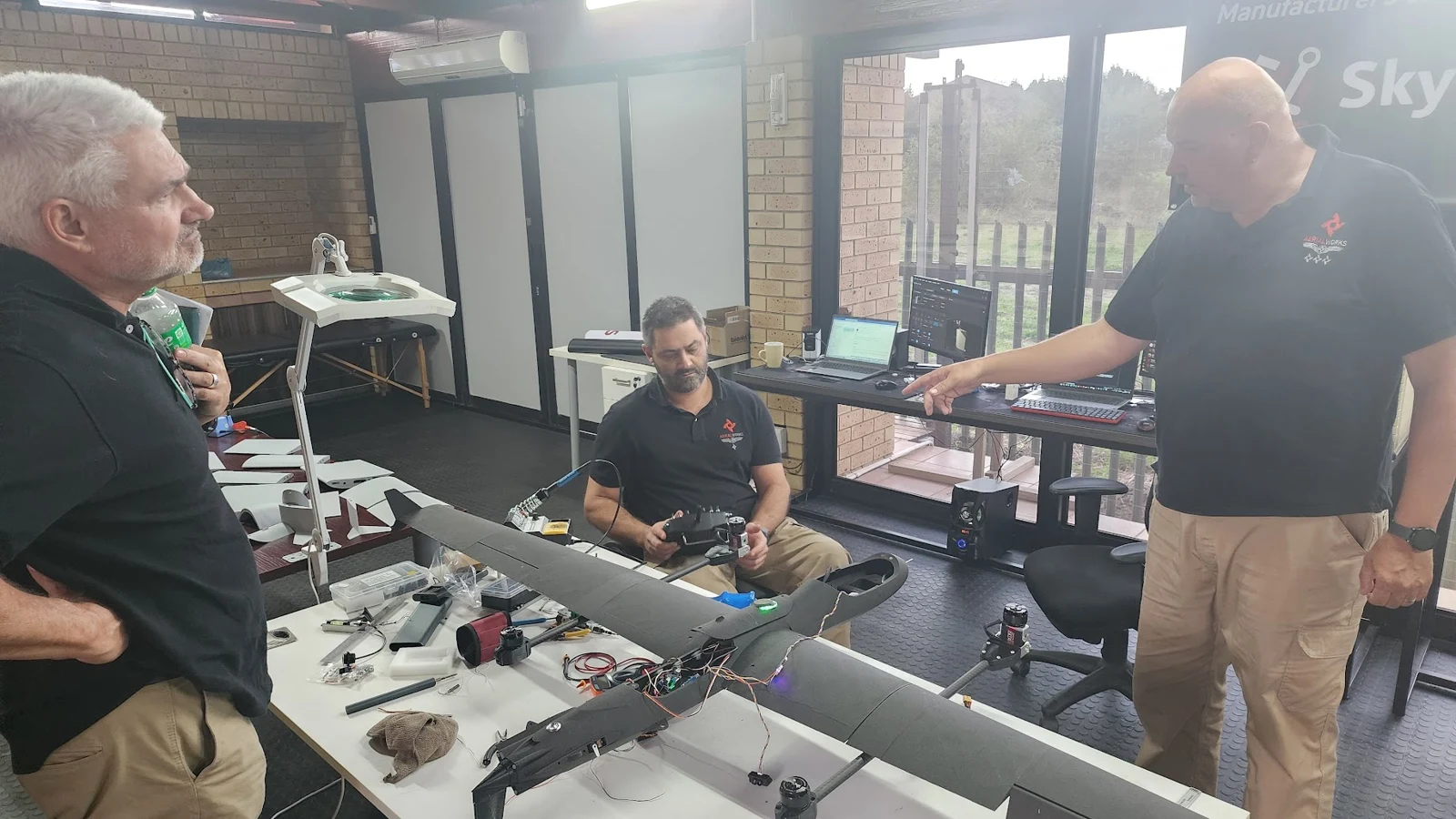
Propulsion and battery integration
Propulsion and battery integration covers motors, propellers, electronic speed controllers, power connections and the equipment they support. The vertical and forward-flight systems on a VTOL aircraft are considered as parts of the complete electrical installation.
The SRV32 G3 standard configuration uses a 12S 40 Ah LiPo battery, with one fitted per flight. The multirotor uses a 6S battery system. Battery installation, handling and charging arrangements are specified for the selected aircraft and supporting equipment.
Software and SkyOS development
Software development connects aircraft data with technical oversight. SkyOS synchronises TLOG flight logs and returns an aircraft-condition assessment to the operator.
Red, Amber or Green feedback is a released function. The wider SkyOS operational platform, predictive modelling and simulation remain separate development activities.
Explore SkyOS development and integration
Flight testing and acceptance
Flight testing connects aircraft development with behaviour in the field. The selected airframe, payload, propulsion, battery and software configuration provide the context for interpreting test results.
Acceptance criteria, the delivered configuration and the supporting records are agreed for the aircraft and its application. The SRV32 G3 two-hour endurance remains a design target subject to flight validation; operational planning uses validated limits, reserves and conditions.
Quality control
Quality control focuses on the relationship between the build configuration, physical installation, software settings and test records. Assembly checks, component identification and the review of observed behaviour support the technical handover.
Build records and maintenance instructions must reflect component and software changes. The delivery specification identifies the inspection and acceptance evidence to be supplied.
Technical documentation
User and maintenance documentation explains the delivered equipment, its configuration and the tasks needed to operate and support it. Aircraft information sits alongside the relevant battery, payload, communications and ground-system instructions.
Training and technical handover connect those documents with the people responsible for the equipment. The scope and format are agreed for the customer, aircraft and operating environment.
Maintenance, spares and technical support
The engineering team supports maintenance planning, replacement components and technical questions about supplied equipment. Aircraft information and available flight logs help investigate reported faults.
The support agreement identifies spares, maintenance responsibilities and training. It gives the operator a clear route for requesting parts and technical assistance.
South African engineering, international reach
Sky Robots South Africa develops and manufactures the technology. Sky Robots Mauritius manages international commercial relationships and the Country Partner programme. This connects the South African technical base with locally established sales, training and support in other markets.